Anthropic's role-based plugins: what they add to Claude Code
TL;DR
- knowledge-work-plugins packages workflows for roles such as sales, legal, and finance. It grew from 11 plugins on January 30 to 123 in October, and 17 of them are built by Anthropic
- Most of the content is Markdown skills plus MCP server endpoints. Even legal's NDA triage is a playbook that falls back to generic defaults when there are no company standards
- Installed in Claude Code, small-business adds about 11,700 tokens to every session through the descriptions of its 44 skills
- The name is protected as an official marketplace and uses the same review pipeline as claude-plugins-official, but auto-update is off by default
Contents (4)
Anthropic’s knowledge-work-plugins showed up on GitHub Trending. It is a plugin catalog that packages Claude workflows by role: sales, legal, finance, and so on. As I did earlier with the official claude-plugins-official catalog, I read through what is inside. I also checked what a developer actually gets by installing these plugins in Claude Code.
A catalog that started with Cowork
The repository’s first commit was on January 29 (US Pacific time). It was announced the next day, January 30, together with plugins for Cowork in the desktop app. The official blog post says Anthropic is open-sourcing 11 plugins that its own team built and uses. A plugin bundles skills, connectors (MCP servers), slash commands, and similar pieces into one unit. In Cowork, plugins were offered as a research preview to everyone on a paid plan (The Decoder, The New Stack). The README describes them as built for Cowork and also compatible with Claude Code (I summarized Cowork’s features in Claude Cowork feature map).
The catalog itself is .claude-plugin/marketplace.json. Counting through the repository history, it listed 11 plugins at the end of January, 39 at the end of March, 79 at the end of June, and 121 at the end of September. The commit on October 21 had 123.
| Location | Count | Examples |
|---|---|---|
| Repository root (built by Anthropic) | 17 | sales, legal, finance, data, small-business |
partner-built/ (third-party plugins bundled in) | 5 | slack-by-salesforce, apollo, zoom-plugin |
| References to external repositories | 101 | Repositories from Box, HubSpot, NetSuite, Vanguard, and others |
All 101 external entries were pinned to commit hashes. Of the 123 plugins, 88 also appear under the same name in claude-plugins-official. The role-based plugins Anthropic built, however, exist only here. The overlapping name data points to different content: data in claude-plugins-official points to Astronomer’s repository. You have to tell data@knowledge-work-plugins and data@claude-plugins-official apart by the part after the @ when installing.
The content is Markdown playbooks
Opening the legal plugin, legal, I found 9 skills and 7 MCP server endpoints. All the skills are Markdown, 2,307 lines in total. For example, the NDA triage skill is a procedure that sorts an incoming NDA into three tiers: “standard approval,” “counsel review,” and “full legal review.” It reads the criteria from the company standards (a playbook) that the user writes in legal.local.md. If there are none, it judges against generic defaults, such as mutual obligations, a term of 2 to 3 years, and no non-compete clause, and it is told to state that the defaults were used. The top of the file also carries a disclaimer that it assists with legal work and does not give legal advice.
Tools are referred to by category names such as ~~cloud storage. According to CONNECTORS.md, .mcp.json is set up with Box and Egnyte, and any MCP server in the same category can be swapped in for another product. When the README calls the plugins a starting point to customize for your company, these company standards and swappable tools are what it means.
After legal was released, on February 3, the share prices of Thomson Reuters, RELX, and Wolters Kluwer, which all run legal information services, fell sharply. An analyst at Morningstar wrote that they were surprised by the reaction. Their view was that the plugin has nothing to do with legislation and case-law research, which is the core of Thomson Reuters’ and RELX’s legal businesses. What you can read in the repository matches that: it is a procedure for checking contracts against standards, and none of its MCP server endpoints is a case-law database.
The README says there is no code, but there are exceptions. The bio-research skills include Python scripts, and pdf-viewer starts a local MCP server with npx. The commands/ directory shown in the structure diagram was also moved into skills in a March 13 commit, and only 2 of the 17 Anthropic-built plugins still have it.
Installing in Claude Code
In the test environment (Claude Code 2.1.310, empty settings), I added the marketplace and installed legal:
$ claude plugin marketplace add anthropics/knowledge-work-plugins
√ Successfully added marketplace: knowledge-work-plugins (declared in user settings)

$ claude plugin install legal@knowledge-work-plugins
√ Successfully installed plugin: legal@knowledge-work-plugins (scope: user)

$ claude plugin details legal@knowledge-work-plugins
Component inventory
  Skills (9)  brief, compliance-check, legal-response, ...
  Hooks (0)
  MCP servers (7)  slack, box, egnyte, atlassian, docusign, google calendar, gmail
Projected token cost
  Always-on:   ~987 tok   added to every session
There were zero hooks. Unlike security-guidance from my earlier post, nothing calls a model in the background and runs up costs. Instead, the skill descriptions are added to every session. For plugins with many skills, that amount gets large.
$ claude plugin details sales@knowledge-work-plugins
  Skills (36)  account-context, account-plan, ...
  MCP servers (23)  slack, hubspot, salesforce, ...
  Always-on:   ~4,399 tok   added to every session

$ claude plugin details small-business@knowledge-work-plugins
  Skills (44)  ad-manager, ap-processor, ...
  MCP servers (35)  airwallex-agentos, apollo-io, ...
  Always-on:   ~11,679 tok   added to every session
Just installing and enabling small-business adds about 11,700 tokens to every session, whatever repository you are working in. These plugins are designed for doing role-specific work in Cowork, so in Claude Code, where you do development, it seems better to enable them only when you need them (claude plugin disable turns one off).
The MCP servers are not usable right after installation. Here is what claude mcp list showed for the 7 servers in legal:
$ claude mcp list
plugin:legal:slack: https://mcp.slack.com/mcp (HTTP) - ! Needs authentication
plugin:legal:box: https://mcp.box.com (HTTP) - × Failed to connect — Incompatible auth server: does not support dynamic client registration
plugin:legal:egnyte: https://mcp-server.egnyte.com/mcp (HTTP) - ! Needs authentication
plugin:legal:atlassian: https://mcp.atlassian.com/v1/mcp (HTTP) - ! Needs authentication
plugin:legal:docusign: https://mcp.docusign.com/mcp (HTTP) - ! Needs authentication
plugin:legal:google calendar:  (HTTP) - - Not configured
plugin:legal:gmail:  (HTTP) - - Not configured
Four were waiting for sign-in, and Google Calendar and Gmail had empty endpoint URLs. Box failed to connect because its authorization server does not support dynamic client registration. On the skill side, the procedure is to skip tools that are not connected and say so in the result. The vendor-check skill, which looks up vendors, says it recommends checking manually when no contract management system is connected.
How it differs from claude-plugins-official
According to Plugin security and trust, knowledge-work-plugins is one of the official names, and a marketplace added under that name from anywhere other than github.com/anthropics/ is not loaded. The review pipeline is also the same. A May 18 commit added nightly hash updates and review by Claude, aligned with claude-plugins-official. The review policy (.github/policy/prompt.md) had the same content in both repositories.
What differs is auto-update. Install and manage plugins says that, even among official marketplaces, knowledge-work-plugins has auto-update off by default. claude-plugins-official has it on by default. To keep installed plugins current, turn on auto-update under Marketplaces in /plugin, or update them yourself.
The README’s “Contributing” section tells you to fork and send a pull request. However, a GitHub Actions workflow added on June 30 automatically closes pull requests from anyone who is not a repository member, except updates to repositories already listed. The closing comment points to the submission form for getting a plugin listed. If you want to change something, the practical route looks like forking it and using the fork as your own marketplace.
If you try the role-based plugins, it seems best to check the always-on tokens and the number of MCP servers with claude plugin details before deciding how widely to enable them. Whether you can write your company standards in a file like legal.local.md is likely what decides whether they beat a playbook running on defaults.
Verification
- Last verified
- Environment
- Claude Code 2.1.310
- knowledge-work-plugins (commit 33d3dea, October 21, 2026)
Related notes
AI
How far Anthropic vets Claude Code's 315 official plugins
I read the 315 plugins in claude-plugins-official, Claude Code's default catalog, and how Anthropic reviews them. Hooks run outside the sandbox; token estimates skip hook costs.
6 min
AI
A map of Claude Cowork features: what it can do, and where you can use it
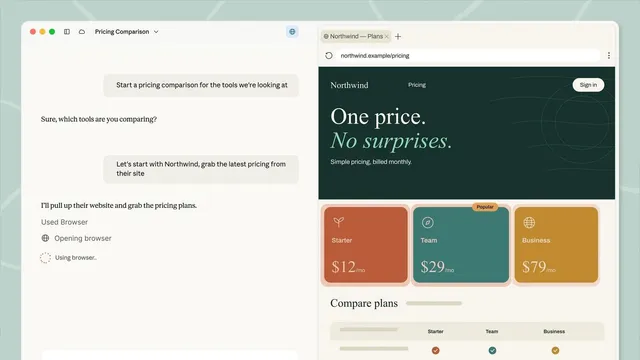
Cowork's features (folder work, built-in browser, scheduled runs, plugins, projects) and official use cases, plus the September 2026 merge with Chat, pricing and safety.
12 min
AI
Claude Code on Google Cloud: org spend limits and ROI
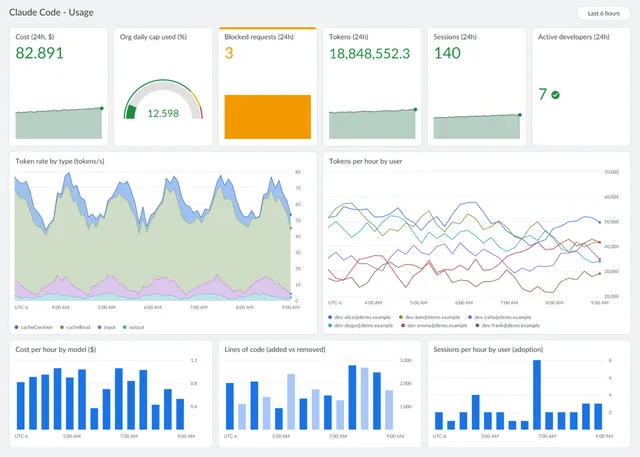
Using Claude Code via Google Cloud Agent Platform in an organization: budgets and limits, collecting usage, and measuring impact, checked against Anthropic's article and the docs.
9 min